Showing posts with label edible. Show all posts

Saturday, April 18, 2015

Lamb's quarters (Chenopodium album)


Chenopodium Album is an ancient plant, related to both beetroot, spinach, and quinoa. It is an odorless, branching, annual herb, with stalked, opposite, simple leaves which are clammy-feeling, unwettable, and have a whitish coating on the underside. The first leaves are roughly diamond-shaped and somewhat toothed toward the point, and the later leaves are narrow and toothless.

Though cultivated in some regions, the plant is elsewhere considered a weed. Common names include lamb's quarters, melde, goosefoot and fat-hen, though the latter two are also applied to other species of the genus Chenopodium, for which reason it is often distinguished as white goosefoot. It is sometimes also called pigweed, however, pigweed is also a name for a few weeds in the family Amaranthaceae.

Chenopodium album is extensively cultivated and consumed in Northern India as a food crop, and in English texts it may be called by its Hindi name bathua.

Nutritional value of raw Lambsquarters

per 100 g (3.5 oz)

Energy: 180 kJ (43 kcal)
Carbohydrates: 7.3 g
Dietary fiber 4 g
Fat: 0.8 g
Protein: 4.2 g
Vitamins:
Vitamin A equiv. (73%) 580 μg
Thiamine (B1) (14%) 0.16 mg
Riboflavin (B2) (37%) 0.44 mg
Niacin (B3) (8%) 1.2 mg
Pantothenic acid (B5)
(2%) 0.092 mg
Vitamin B6 (21%) 0.274 mg
Folate (B9) (8%) 30 μg
Vitamin C (96%) 80 mg
Trace metals:
Calcium (31%) 309 mg
Iron (9%) 1.2 mg
Magnesium (10%) 34 mg
Manganese (37%) 0.782 mg
Phosphorus (10%) 72 mg
Potassium (10%) 452 mg
Sodium (3%) 43 mg
Zinc (5%) 0.44 mg


Properties and uses:

The leaves are anthelmintic, antiphlogistic, antirheumatic, mildly laxative, odontalgic. The leaves are applied as a wash or poultice to bug bites, sunstroke, rheumatic joints and swollen feet, whilst a decoction is used for carious teeth.  When prepared as an infusion, it manages hepatic disorders, spleen enlargement, biliousness, burns, and ulcers. Lamb’s quarters contain some oxalic acid therefore when eating this raw, small quantities are recommended. Cooking removes this acid. Lamb’s quarter can be eaten in salads or added to smoothies and juices. Steaming this edible weed is one method of cooking, or can be added to soups, sautés and much more. Drying this wild edible is one way to add this nutritious plant to your meals throughout the winter or you can blanch and freeze the leaves.

Seeds are high in protein, vitamin A, calcium, phosphorus, and potassium. Can be chewed in the treatment of urinary problems and are considered useful for relieving the discharge of semen through the urine. Saponins in the seeds are potentially toxic and should not be consumed in excess. Cooking or soaking them in water overnight and thoroughly rinsing before being used will remove any saponins.

The juice of the stems is applied to freckles and sunburn.

The juice of the root is used in the treatment of bloody dysentery.

A green dye is obtained from the young shoots.

The crushed fresh roots are a mild soap substitute.

Chenopodium album is vulnerable to leaf miners, making it a useful trap crop as a companion plant. Growing near other plants, it attracts leaf miners which might otherwise have attacked the crop to be protected. It is also used to feed animals.

Bio-dynamic farmers dry them and combine with equal parts dried dandelion, nettle, purslane, sage, and chamomile to make a special plant food for the autumn garden.

Recipes ideas:
  • To make a bathua paste for use in many traditional Indian recipes, steam the leaves until wilted, strain any water, and then blend until smooth. Add water only if necessary.
  • One of the simplest dishes for this green is lightly flavored steamed bathua: steam tender leaves until brightly green but not mushy. Plate the greens and drizzle olive oil, lemon juice, fresh garlic, and a bit of soy sauce.
  • Make a raw vegan soup by blending soaked cashews, tomato, garlic, onion, lime, olive oil, dates, salt, bathua, butterfruit, and capsicum. To make a cooked soup, heat onions and garlic in olive oil until golden brown. Add salt and pepper, and then toss in plain soymilk with the greens. Blend until smooth.
  • If in possession of a blender powerful enough to liquefy greens, use as part of a green smoothie. It pairs best with sweet fruits and veggies, such as beets and grapes.
  • Add the whole leaves to lentil soup recipes near the last twenty minutes of the preparation.
Salt and Vinegar Lambs Quarters Recipe
5 cups washed chopped lamb’s quarter leaves
2 tbsps. raw apple cider vinegar
2 tbsp. olive oil
1/4 tsp. sea salt
Optional:
2 tbsps. of any finely chopped fresh garden herb of your choice (rosemary, basil, thyme, mint, etc.)

Wash and chop greens and place into a bowl. Add all other ingredients and mix well. This can be eaten fresh or you can bake this for 20 minutes at 325°F. (Spread evenly on a baking sheet.)

Lambs Quarters Herbal Salt Recipe
1 part dried lamb's quarter leaves
1 part dried thyme or rosemary
1 part dried dill
1 part dried marjoram or oregano
2 parts dried dulce (or any available seaweed that is safe to eat)

Gently toast the dulce in a skillet until very crisp. Grind the lamb’s quarters and herbs in a blender or a coffee mill while seaweed cools. Then grind the dulce and combine with ground herbs. Store in a shaker.


Sources:

http://en.wikipedia.org/wiki/Chenopodium_album

http://www.ediblewildfood.com/lambs-quarters.aspx

http://pfaf.org/user/Plant.aspx?LatinName=Chenopodium+album

http://www.susunweed.com/herbal_ezine/September09/healingwise.htm

http://theindianvegan.blogspot.pt/2014/01/all-about-bathua-chenopodium-album.html

Narrowleaf Plantain (Plantago Lanceolata)


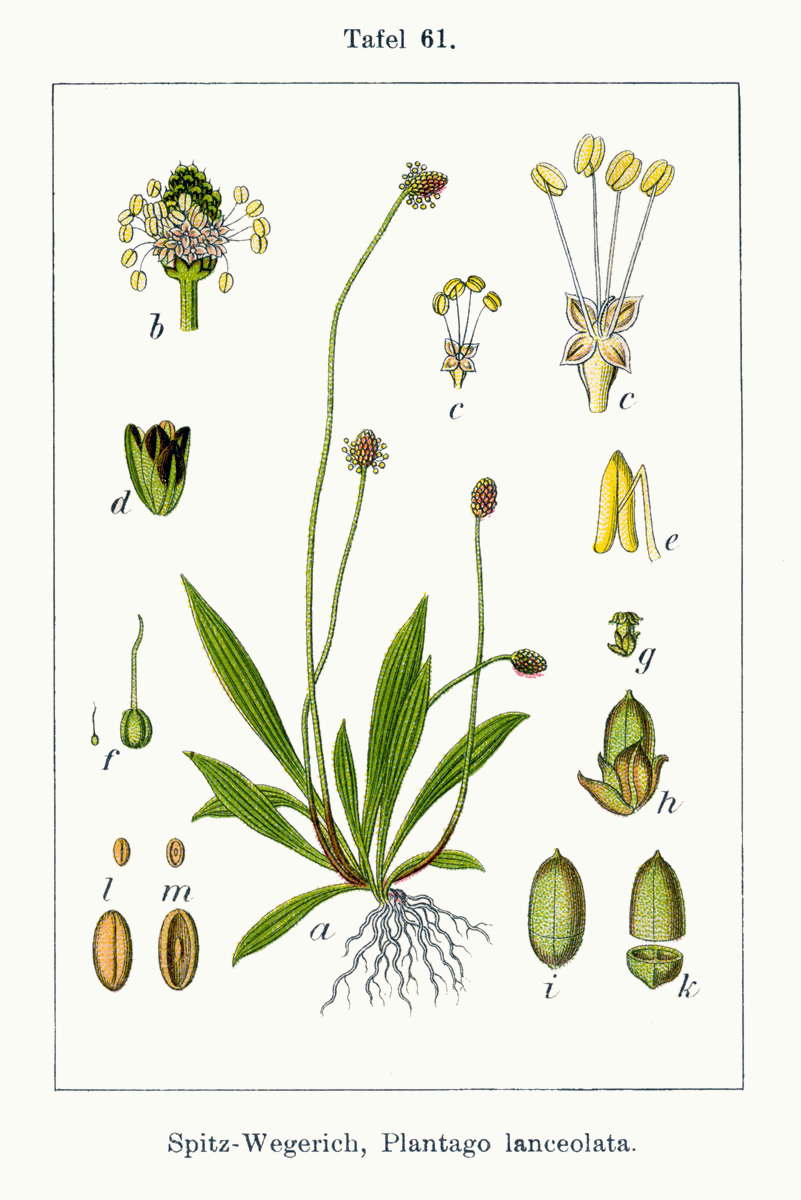
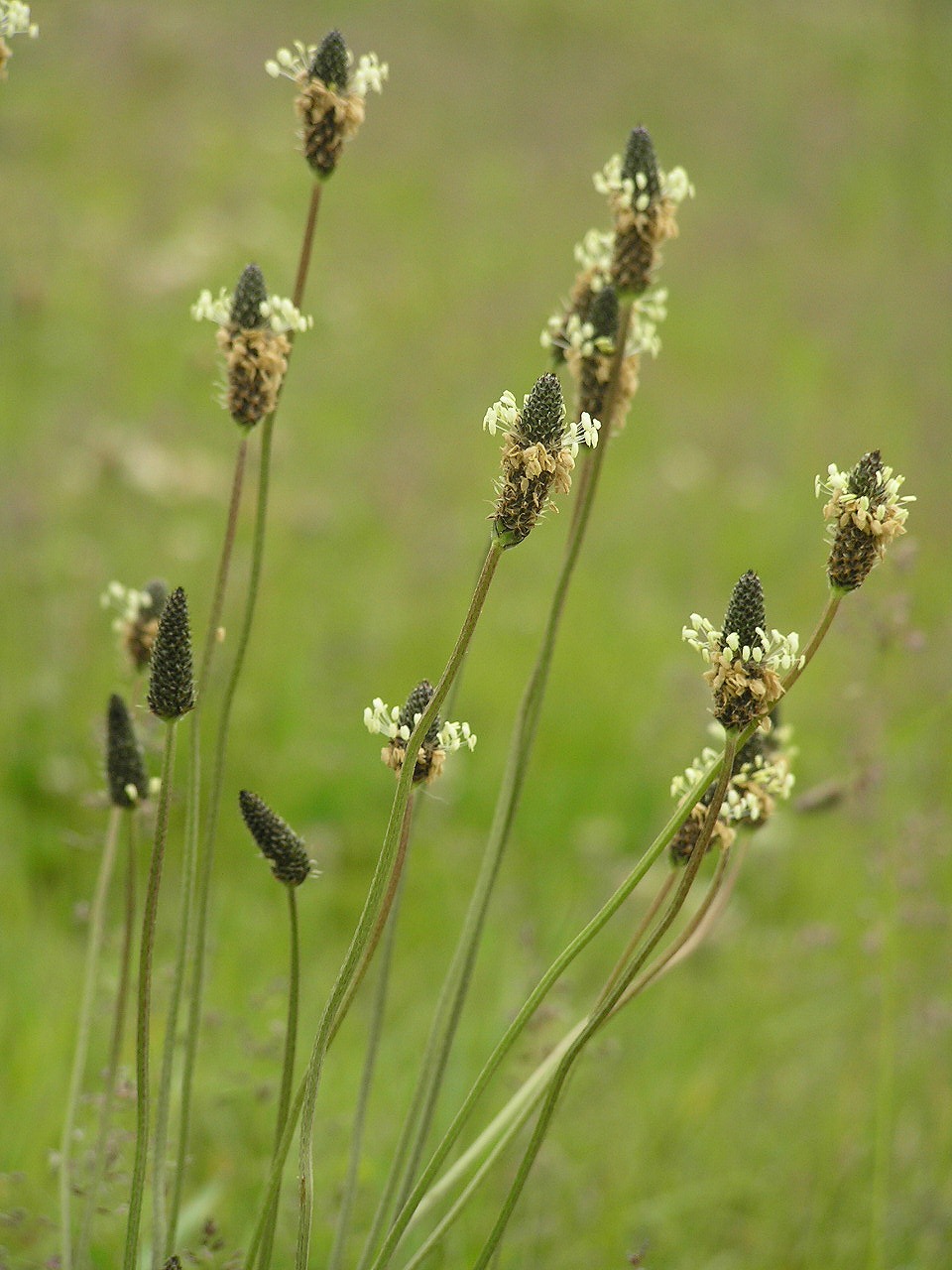
Plantago Lanceolata, from the Plantain family is also known as narrowleaf plantain, ribwort plantain, ribleaf, buckhorn plantain, buckhorn and lamb's tongue.

Taxonomy

The plant is a rosette-forming perennial herb, with leafless, silky, hairy flower stems (10–40 cm or 3.9–15.7 in). The basal leaves are lanceolate spreading or erect, scarcely toothed with 3-5 strong parallel veins narrowed to short petiole. Grouping leaf stalk deeply furrowed, ending in an ovoid inflorescence of many small flowers each with a pointed bract. Each flower can produce up to two seeds. Flowers 4 mm (calyx green, corolla brownish), 4 bent back lobes with brown midribs, long white stamens.

Properties:

Ribwort plantain is a safe and effective treatment for bleeding, it quickly staunches blood flow and encourages the repair of damaged tissue. The leaves contain mucilage, tannin and silic acid. An extract of them has antibacterial properties. They have a bitter flavour and are astringent, demulcent, mildly expectorant, haemostatic and ophthalmic.


Uses:

Internally, they are used in the treatment of a wide range of complaints including diarrhea, gastritis, peptic ulcers, irritable bowel syndrome, hemorrhage, hemorrhoids, cystitis, bronchitis, catarrh, sinusitis, asthma and hay fever. They are used externally in treating skin inflammations, malignant ulcers, cuts, stings, etc. The heated leaves are used as a wet dressing for wounds, swellings etc.
The root is a remedy for the bite of rattlesnakes, it is used in equal portions with Marrubium vulgare.
The seeds are used in the treatment of parasitic worms. Plantain seeds contain up to 30% mucilage which swells up in the gut, acting as a bulk laxative and soothing irritated membranes. Sometimes the seed husks are used without the seeds. A distilled water made from the plant makes an excellent eye lotion.

A good fibre is obtained from the leaves, it is said to be suitable for textiles. A mucilage from the seed coats is used as a fabric stiffener. It is obtained by macerating the seed in hot water. Gold and brown dyes are obtained from the whole plant.


Edible parts:

Young leaves - raw or cooked. They are rather bitter and very tedious to prepare, the fibrous strands are best removed prior to eating. The very young leaves are somewhat better and are less fibrous.
Seeds - cooked. Used like sago. The seed can be ground into a powder and added to flours when making bread, cakes or whatever.


Sources:

http://en.wikipedia.org/wiki/Plantago_lanceolata

http://www.pfaf.org/user/plant.aspx?LatinName=Plantago+lanceolata

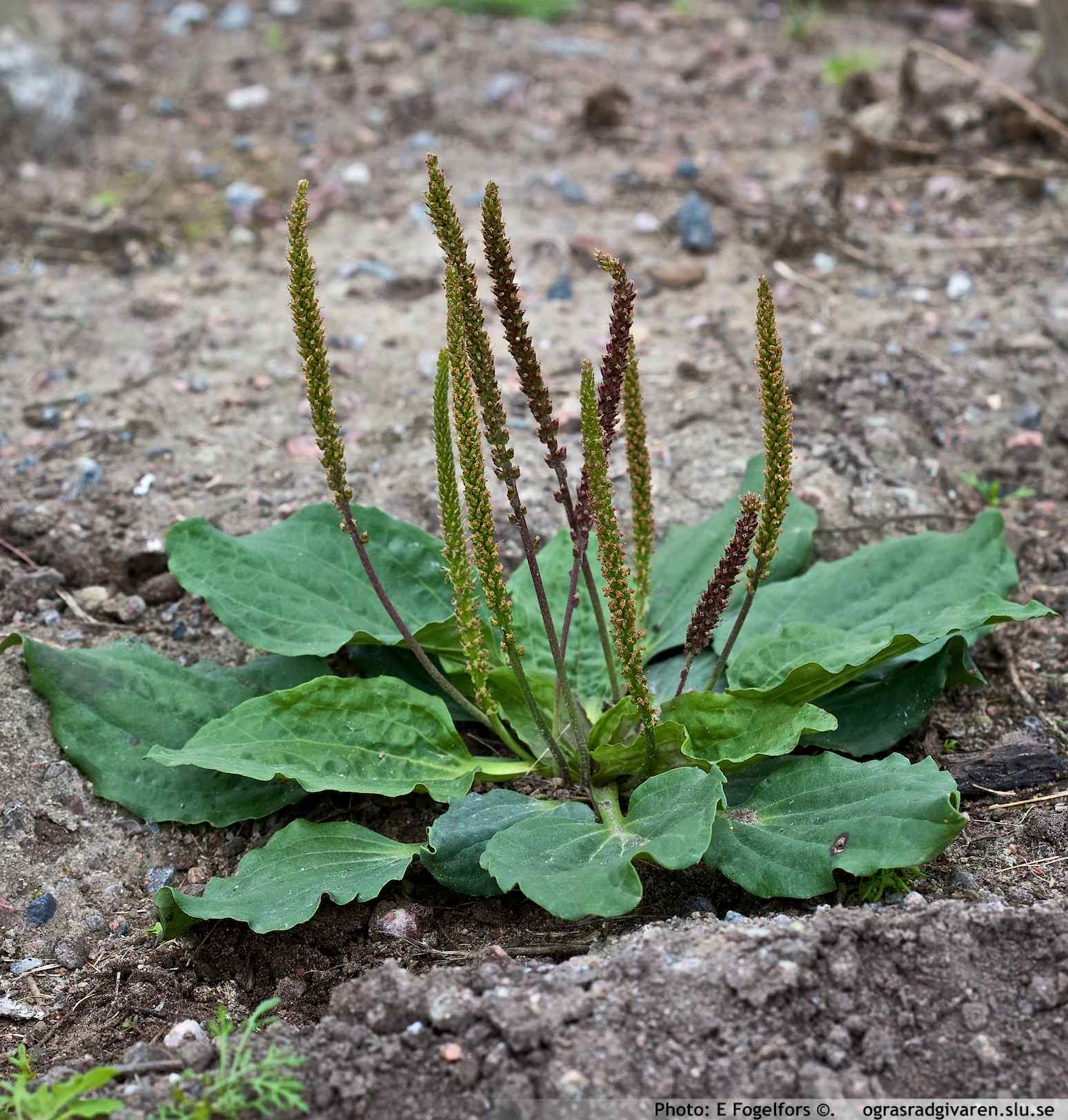
Broadleaf Plantain (Plantago Major)


Plantain is considered a common lawn weed. However, it has been used for thousands of years as a medicinal plant (for inflammation, bleeding, and infections) as well as a potherb and salad green. It is also a great addition to the Forest Garden, as it attracts beneficial insects, is a dynamic mineral accumulator, is tolerant of drought and is a great forage crop for animals.

Properties:

There are many more highly effective constituents in this plant including Ascorbic-acid, Apigenin, Baicalein, Benzoic-acid, Chlorogenic-acid, Citric-acid, Ferulic-acid, Oleanolic-acid, Salicylic-acid, and Ursolic-acid. The leaves and the seed are medicinal used as an antibacterial, antidote, astringent, anti-inflammatory, antiseptic, antitussive, cardiac, dem anti-toxic, antimicrobial, anti-histamine, stypticulcent, diuretic, expectorant, haemostatic, laxative, ophthalmic, poultice, refrigerant, and vermifuge. Medical evidence exists to confirm uses as an alternative medicine for asthma, emphysema, bladder problems, bronchitis, fever, hypertension, rheumatism and blood sugar control.

Uses:

Young leaves are edible raw in salad or cooked as a pot herb, they are very rich in vitamin B1 and riboflavin. Often blanched to make more tender. Most often used as flavor/nutrition addition to mixed salads.

Extracts of the plant have antibacterial activity, it is a safe and effective treatment for bleeding, it quickly stops blood flow and encourages the repair of damaged tissue.
The heated leaves are used as a wet dressing for wounds, skin inflammations, malignant ulcers, cuts, stings and swellings and said to promote healing without scars.
Poultice of hot leaves is bound onto cuts and wounds to draw out thorns, splinters and inflammation.
A distilled water made from the plant makes an excellent eye lotion.

Seeds can be eaten raw or cooked or ground as flour addition. Considered a great fiber source, seeds contain up to 30% mucilage which swells in the gut, acting as a bulk laxative and soothing irritated membranes. The seeds are used in the treatment of parasitic worms.

A decoction of the roots is used in the treatment of a wide range of complaints including diarrhoea, dysentery, gastritis, peptic ulcers, irritable bowel syndrome, haemorrhage, haemorrhoids, cystitis, bronchitis, catarrh, sinusitis, coughs, asthma and hay fever.
It also causes a natural aversion to tobacco and is currently being used in stop smoking preparations.


Recipes

"Medicinal"  herb tea:  For colds and flu use 1 tbls. dry or fresh whole Plantain (seed, root, and leaves) to 1 cup boiling water, steep 10 min. strain, sweeten. Drink through the day.

Healing salve: In large non-metallic pan place 1lb. of entire Plantain plant chopped, and 1 cup lard, cover, cook down on low heat till all is mushy and green. Strain while hot, cool and use for burns, insect bites, rashes, and all sores. Note: used as night cream for wrinkles.

Young shoots: Pan-fry in olive oil for just a few seconds to bring out this taste.

Baked: 
Fresh large plantain leaves (washed and dried)
1 cup whole wheat flour
1 1/2 cup water
1 egg
2 tbsp. wheat germ
2 tbsp. spiked salt (or a variety of spices of your choosing)

Preheat oven to 400°F.
Combine the flour, water, egg, wheat germ and spices into a bowl and mix well. Dip leaves into the batter and place onto a baking sheet lined with parchment paper. Be sure to not to overlap for best results. Bake 5 -10 minutes if the leaves used are very large. If the plantain leaves are smaller then start watching them at about the 3-4 minute mark to ensure they do not burn. Serve warm or once cooled!

Nutty Plantain Snack Recipe

1 handful of plantain seed
3 handfuls of pumpkin seeds
3 handfuls of sesame seeds
Olive oil (enough to just cover the seeds)
Sea salt to taste

Place seeds into a bowl, add olive oil and salt. Be sure to coat all seeds. Either roast seeds in oven on a baking sheet at 300°F for 10-15 minutes or roast them in a frying pan on the stove.


Sources:

http://en.wikipedia.org/wiki/Plantago

http://www.altnature.com/gallery/plantain.htm

http://www.ediblewildfood.com/broadleaf-plantain.aspx

http://tcpermaculture.blogspot.pt/2012/10/permaculture-plants-plantain.html

Wednesday, March 18, 2015

Cleavers, the sticky willy stickyweed

20150302_144505


Cleavers are in the Rubiaceae family which consists of flowering plants in the coffee, madder, or bedstraw family. In particular cleavers are in the bedstraw family. There are upwards of 3,000 species in the Rubiaceae family. Other names that cleavers are known as include sticky willy, stickybud, stickyweed, kisses, and clivers. Some people may experience a rash when they touch this plant; if so – DO NOT INGEST!


20150302_144440

Distinguishing Features: Cleavers are an annual plant that creeps along with straggling stems that branch out. They attach themselves to anything in their way with small hooked hairs that grow out of the leaves and stems.

Flowers: Flowers can be inconspicuous as they are very small (1mm long and 1-2mm across). They are white with four petals and fused together at their base. Flowers are arranged in small spreading clusters (1-9 flowers) on short side branches. They have four tiny yellow stamens and flowers occur mostly late spring into summer.

Leaves: Stalkless leaves are borne in groups of 6-9 at each of the stem joints and they are whorled. Cleaver leaves are narrow (10-80 mm long and 2-10 mm wide) or lance-shaped with pointed tips and tiny backward-pointing prickles along their margins. Upper and lower leaf surface are loosely covered with tiny hooked hairs.

Height: Cleavers typically are creeping plants and do not grow in height unless they attached themselves to a tall plant or tree. The stems can grow up to two metres (6’) in length.

Habitat: Cleavers commonly grow in hedgerows and field margins. They also grow near crops, orchards, waste areas, disturbed areas, pastures, open woodlands and in gardens. This plant is commonly found in temperate environments but it can be found in some sub-tropical areas. Native to Europe and western Asia is has made its way throughout Australia, Canada, U.S., Mexico, Central America, some countries in South America and North Africa.

Edible parts: Cleavers have historically been known as a medicinal plant although it is food too. The leaves and stems can be used as leaf vegetable although it is very sticky so it will not blend well in a salad. It can be used on bread in sandwiches and sautéed. Fruits of the cleavers can be collected and dried, then roasted for use as a coffee substitute. Leaves and stems can be dried and used for tea.

Similar plants: Galium murale, Galium divaricatum. [*]

20150302_144452

Sources:
http://www.ediblewildfood.com/cleavers.aspx

Tuesday, March 17, 2015

Stinging Nettle

Urtica dioica, often called common nettle or stinging nettle (although not all plants of this species sting), is a herbaceous perennial flowering plant, native to Europe, Asia, northern Africa, and North America, and is the best-known member of the nettle genus Urtica. The species is divided into six subspecies, five of which have many hollow stinging hairs called trichomes on the leaves and stems, which act like hypodermic needles, injecting histamine and other chemicals that produce a stinging sensation when contacted by humans and other animals.[1] The plant has a long history of use as a medicine, as a food source and as a source of fibre. [1]

20150127_151513

Properties Diuretic, astringent, pectoral, anodyne, tonic, rubefacient, styptic, anthelmintic, nutritive, hermetic, anti-rheumatic, anti-allergenic, decongestant, expectorant, anti-spasmodic, and anti-histamine, anti-lithic/lithotrophic, herpetic, galactagogue, and an anti-histamine. [2] Nettle has been used for centuries to treat allergy symptoms, particularly hayfever. It has been studied extensively and has shown promise in treating Alzheimer's disease, arthritis, asthma, bladder infections, bronchitis, bursitis, gingivitis, gout, hives, kidney stones, laryngitis, multiple sclerosis, PMS, prostate enlargement, sciatica, and tendinitis! Externally it has been used to improve the appearance of the hair, and is said to be a remedy against oily hair and dandruff. The leaf is used here as a diuretic, for arthritis, prostatitis, rheumatism, rheumatoid arthritis, high blood pressure and allergic rhinitis. The root is recommended as a diuretic, for relief of benign prostatic hyperplasia (BPH) and other prostate problems, and as a natural remedy to treat or prevent baldness An infusion of the plant is very valuable in stemming internal bleeding. It is also used to treat anaemia, excessive menstruation, hemorrhoids, arthritis, rheumatism and skin complaints, especially eczema. Externally, the plant is used to treat skin complaints, arthritic pain, gout, sciatica, neuralgia, hemorrhoids and hair problems. In addition, nettle's aerial parts may reduce the amount of histamine that is produced by the body in response to an allergen. A solution of the extract may be applied to the skin to relieve joint pain and muscle aches. Astringent properties of nettle aerial parts may also help to lessen the swelling of hemorrhoids and stop bleeding from minor skin injuries such as razor nicks. An astringent shrinks and tightens the top layers of skin or mucous membranes, thereby reducing secretions, relieving irritation, and improving tissue firmness. It may also be used topically for dandruff and overly oily hair and scalp.[3]

  20150127_151544  
  • Nettle stimulates the lymph system to boost immunity
  • Nettle relieves arthritis symptoms
  • Nettle promotes a release from uric acid from joints
  • Helps to support the adrenals
  • It helps with diabetes mellitus
  • Strengthens the fetus in pregnant women
  • Promotes milk production in lactating women
  • Relieves menopausal symptoms
  • Helps with menstrual cramps and bloating
  • Helps break down kidney stones
  • Reduces hypertension
  • Helps with respiratory tract disease
  • Supports the kidneys
  • Helps asthma sufferers
  • Stops bleeding
  • Reduces inflammation
  • Reduces incident of prostate cancer
  • Minimizes skin problems
  • Eliminates allergic rhinitis
  • Lessens nausea
  • Cures the common cold
  • Helps with osteoarthritis
  • Alleviates diarrhea
  • Helps with gastrointestinal disease, IBS, and constipation
  • Reduces gingivitis and prevents plaque when used as a mouth wash.
  • Has been shown to be helpful to in the treatment of Alzheimer’s disease
  • Relieves neurological disorders like MS, ALS and sciatica
  • Destroys intestinal worms or parasites
  • Supports the endocrine health by helping the thyroid, spleen and pancreas [2]
20150127_151625 Gardening Nettles are the exclusive larval food plant for several species of butterfly and are also eaten by the larvae of some moths. The roots are sometimes eaten by the larva of the Ghost Moth Hepialus humuli. As well as the potential for encouraging beneficial insects, nettles have a number of other uses in the vegetable garden. The growth of nettles is an indicator that an area has high fertility (especially phosphorus). Nettles contain a lot of nitrogen and so are used as a compost activator or can be used to make a liquid fertiliser which although somewhat low in phosphate is useful in supplying magnesium, sulphur and iron. They are also one of the few plants that can tolerate, and flourish in, soils rich in poultry droppings.[1] Cooking Urtica dioica has a flavour similar to spinach and cucumber when cooked and is rich in vitamins A, C, iron, potassium, manganese, and calcium. Soaking stinging nettles in water or cooking will remove the stinging chemicals from the plant, which allows them to be handled and eaten without injury. After the stinging nettle enters its flowering and seed setting stages the leaves develop gritty particles called cystoliths, which can irritate the urinary tract. [1]

Sources: [1] http://en.wikipedia.org/wiki/Urtica_dioica [2] http://naturalsociety.com/29-nettle-tea-benefits-health-herb/ [3] http://www.herbwisdom.com/herb-nettle.html  

Common Chickweed


Stellaria media, chickweed, is a cool-season annual plant native to Europe, which is often eaten by chickens. It is sometimes called common chickweed to distinguish it from other plants called chickweed. Other common names include chickenwort, craches, maruns, winterweed. The plant germinates in fall or late winter, then forms large mats of foliage. Flowers are small and white, followed quickly by the seed pods. This plant flowers and sets seed at the same time. [*]

Chickweeds are medicinal and edible plants. They are very nutritious, high in vitamins and minerals, can be added to salads or cooked as a pot herb, tasting somewhat like spinach.

The major plant constituents in Chickweed are Ascorbic-acid, Beta-carotene, Calcium, Coumarins, Genistein, Gamma-linolenic-acid, Flavonoids, Hentriacontanol, Magnesium, Niacin, Oleic-acid, Potassium, Riboflavin, Rutin, Selenium, Triterpenoid saponins, Thiamin, and Zinc. The whole plant is used in alternative medicine as an astringent, carminative, demulcent, diuretic, expectorant, laxative, refrigerant, vulnerary. [*]


A decoction of the whole plant of Chickweed is taken internally as a post-partum depurative, emmenagogue, galactogogue and circulatory tonic. It is also used to relieve constipation, an infusion of the dried herb is used in coughs and hoarseness, and is beneficial in the treatment of kidney complaints. as an astringent, carminative, demulcent, diuretic, expectorant, laxative, refrigerant, vulnerary.
The decoction is also used externally to treat rheumatic pains, wounds and ulcers. Chickweed can be applied as a medicinal poultice and will relieve any kind of roseola and is effective wherever there are fragile superficial veins or itching skin conditions. [*]


The plant has medicinal purposes and is used in folk medicine. It has been used as a remedy to treat itchy skin conditions and pulmonary diseases.[4] 17th century herbalist John Gerard recommended it as a remedy for mange. Modern herbalists mainly prescribe it for skin diseases, and also for bronchitis, rheumatic pains, arthritis and period pain.[citation needed] A poultice of chickweed can be applied to cuts, burns and bruises [*]

They are as numerous in species as they are in region. Most are succulent and have white flowers, and all with practically the same edible and medicinal values. They all exhibit a very interesting trait, (they sleep) termed the ’Sleep of Plants,’ every night the leaves fold over the tender buds and the new shoots. [*]

The cultivation of this one is not necessary it is abundant and easy to find. Gather fresh edible plant between May and July, as soon as flowers appear, it can be used fresh or be dried for later herb use.[*]

Identify

Distinguishing Features: Chickweed grows in a unique, intertwined manner, and it has small white star-shaped flowers hence its Latin name, Stellaria media. Stems have a thin line of white hair that grows in a weave-like pattern.

Flowers: Chickweed flowers are small, white, and are produced at the tips of stems and in angles between branches. The white petals are shorter than the 3-4mm long green sepals; each of the 5 petals is 2-lobed so the flower may appear to have 10 tiny petals.

Leaves: Chickweed leaves are oval with pointed tips that are smooth or slightly hairy.

Height: Chickweed can grow from 5 to 50 cm. tall.

Habitat: Chickweed grows in many areas in a wide variety of habitats and soil textures. It is one of the most common weeds founds in lawns but it also grows well in cultivated fields, pastures, waste areas and even under deciduous forests. [*]

Recipes

Medicinal tea: To 1 tbls. dried herb, 2 if fresh, add 1 cup boiling water steep for 10 min. Take in 1/2 cup doses 2 to 4 times daily, during a cold or flu. [*]


Sources:
http://www.dsway.co.uk/d
http://en.wikipedia.org/wiki/Stellaria_media
http://www.altnature.com/gallery/chickweed.htm
http://www.ediblewildfood.com/chickweed.aspx